Showing posts with label colour. Show all posts

25.8.13

why film? part two

lomo lca+, 2013 
In part one of my investigation into my reasons for exclusively using film, I set up the questions surrounding my assumption that, generally speaking, film offers a closer representation of the real than digital technology. And there were a lot of questions, and a lot of contradictions. This surprised even me. It also led to a lot of introspective thought on my part, as I searched all the logic in my head to try to find answers. I've always known why I love film: its honesty. I just had to figure out why I so steadfastly believe that film and honesty are inextricably linked.

Before I go into my conclusions, I want to take a moment to explain why honesty in my photography is so important to me. Photography is, among other things, an art form. As such, creative people have long been pushing the medium - both with film and digital technologies - to produce wonderful, fantastical images that are very obviously not representations of reality. Some artists, such as Jeff Wall, employ meticulous staging and production techniques to challenge our very assumptions of truth in the image. All of these approaches to photography are valid. Many artists create brilliant, important work by presenting visual untruths.

In most of my work, however, I aim to capture actual truths. I mean this both in the journalistic sense, where my social and travel photography documents people and places as they exist at a moment in time, and in a more literal sense, where I aim to keep my (sometimes staged) portraits and press shots free of any post-production manipulation. It is the medium's ability to capture an image of reality, as Bazin discussed, that draws me to the camera again and again. And I think this implication of truth in the image, and particularly in photojournalism, is why we collectively feel so cheated when a journalistic image is exposed as a hoax, or even as a manipulated version of reality (such as the war photos of freelance photojournalist Adnan Hajj, which were revealed to be heavily doctored after being published globally via Reuters).

nikon f4, 2013 
But Greta, you might say, your multiple exposures don't represent truth! The world doesn't look like that! And you would be right in the sense that during the gig depicted in the above photo, for example, there were not two identical guitarists on the stage. However, in all my multiple exposures, each image within the frame is a representation of truth, and usually there is some 'real' connection between the exposures (for example, a person and the environment they're in, or, as above, the same person mere moments apart). Furthermore, the process of exposing such images - all within the camera, on film - is also keenly related to truth and authenticity. But more on that in part three.

Digital is just as capable of being honest with us as film is. There is no reason why a digital camera can't capture as much truth as a film camera can. And, as we have seen, film cameras (and film photos that have been digitally edited after the fact) are just as capable of telling untruths as digital cameras. So - back to the issue at hand - why do I (and others) more readily associate film with truth, and digital with deception? My reasoning can be separated into two distinct arguments: the psychological and the practical.

splitcam, 2013 
psychological factors

Most of us have grown up with scores of family photo albums. Those enormous tomes, with pages where the plastic sheets peel away to unleash faded prints laid over cut newspaper (lest they stick to the board), mapping out pieces of lives once lived. Some prints have rounded corners. Some are torn. Some have that strange textured surface, like a miniature grid. Maybe some are really old - cracked black and white wedding photos of great aunties, or baby portraits of Grandpa. There may be sepia, and dust marks or scratches. There may even be a few photos with strange multiple images because someone forgot to wind on the film. There will be dated fashions: long hair and crocheted bikinis of the seventies; smart hats and daytime gloves of the fifties; mullets and fluoro colours of the eighties. There are picnics, birthday parties (complete with Women's Weekly party cakes), camping trips, Christmas trees, grinning kids with missing teeth, dress-up days, first days of school, weddings, debutante balls, pregnant bellies, bassinets. All of these common events appear to create a distinct tapestry of life. Each family has a different history; each album is filled with an enormous array of stories unique to those lives.

But for all the myriad variations that exist from family to family and album to album, each of these exorbitantly heavy, dust-covered epics have something in common: when we look at the images within, we know that they are real. Mum did bake that swimming pool cake. Your sister did wear those fluoro leggings. Your grandpa was wearing a dress for his 1920s baby portrait. There was no Photoshopping when your parents got married in 1976. No-one airbrushed the pimples on your cousin's chin when he won that under-18s footy trophy in 1989. These photos show us life through the poor-quality lenses of our family's past.

diana, c. 2009 

holga, 2012 

holga, 2012 
It is for this reason that when we see the faded colours, the vignetting, the soft focus and/or the multiple exposures that are now synonymous with Lomography cameras and other analogue toy/plastic cameras, we feel that we can trust them more than, say, a glaringly flawless digital image. Whether it's conscious or not - and I suspect in most cases, it isn't - our attraction to analogue aesthetics is a rejection of the superficiality inherent in so much digital technology. We collectively crave a return to the real. I have no doubt that this accounts for the unprecedented popularity of Instagram - the retro aesthetic that the app employs combines with its primary function of taking 'instant' photos to present a modern-day version of the Polaroid; a real moment in time, captured in a few seconds and instantaneously broadcasted to the world, with no time for trickery (apart from the regimented filters, which in turn contribute to the psychological acceptance of truth in the image... get it?!).

nikon f4, 2013   

nikon f4, 2013 

nikon f4, cross-processed slide, 2011 

nikon f4, cross-processed slide, 2011 
To a lesser extent, the subtle analogue characteristics that are often present in 'professional' film cameras (such as high-end SLRs) function in the same way: the grain of a high-speed film, the complex saturation of a cross-processed slide film, the tiny specks of dust that attach to the negative during scanning, a carefully considered in-camera multiple exposure. Many of these things are sometimes considered to be imperfections, but to me, they are precisely the opposite; they are perfect because they denote the truth.

Coming up in part three: practical factors.
26.5.13

why film? part one


Why film?

It's a question that I get asked a lot. And I ask it of myself even more often. It's something I've been thinking hard about, and trying to articulate, for the longest time. The closest thing to an answer I've ever been able to achieve is less an explanation than a feeling. A very strong feeling that I just have no interest in taking up digital photography. An extremely strong feeling that I am just in love with film. But this hasn't satisfied my intense curiosity on the matter.

While buying and testing out my new (film) camera - the most expensive one I've bought yet - the question seemed more relevant than ever. While I don't yet have a single, definitive answer, here I'm going to attempt to explore one of my strongest suspicions as to the reason I continue to stubbornly snub new (digital) forms of photography.


The core of this suspicion is my very general belief that film just seems more real than digital. When I have tried to explain this in the past, I haven't been able to get much further than the logic that film is a physical medium - the image is there on the strip of negative, permanent and concrete. Digital, on the other hand, begins and ends in the virtual realm. It's made up of ones and zeros, and open to a plethora of manipulation and dishonesty within ubiquitous programs like Photoshop. Digital photography has opened the medium up to a world of effects, techniques and methodologies that allow images to be spectacularly manipulated. In many ways, this is a wonderful thing, as artists can create images that simply couldn’t be achieved before. But it also means that our default position when we see a remarkable image is to suspect (at best) or assume (at worst) that it has been digitally manipulated. From famous hoaxes (such as the 9/11 tourist photo, see that and more here) to celebrities that have been airbrushed to within an inch of their lives (there’s a good collection here), the ubiquity of Photoshop in modern media, and photography, means that photographic images can’t really be trusted. Or, as Erik Voons writes in his introduction to the ‘New Realities’ issue of Guide to Unique Photography, ‘while fully embracing digitization and accepting that the plethora of synthesised images will continue to grow, it has nonetheless become difficult (if not impossible) to make a distinction between pictures that are “real” and those that have been altered.’


It wasn’t always this way. In fact, when photography was in its infancy, it was prized for precisely the opposite.

André Bazin was one of the most influential cinema theorists of the twentieth century. He co-founded French cinema journal Cahiers du cinéma in 1951, which would permanently alter the direction of modern film theory (case in point: its much-debated auteur theory is still taught in film schools today). In 'The Ontology of the Photographic Image', Bazin posits that photographic technology changed the face of creative representation by, for the first time, enabling reality to be visually duplicated. While traditional art forms had been representing reality for centuries, the photograph presented a way to '[completely satisfy] our appetite for illusion by a mechanical reproduction in the making of which man plays no part'. While obviously man does play a part in the composition and the act of taking the photograph, Bazin's point is that subjectivity ends there; unlike in, say, painting, the image is a mechanical duplication of life rather than a hand-made interpretation. In his words:

For the first time, between the originating object and its reproduction there intervenes only the instrumentality of a nonliving agent ... The personality of the photographer enters into the proceedings only in his selection of the object to be photographed and by way of the purpose he has in mind. Although the final result may reflect something of his personality, this does not play the same role as is played by the painter.


That's it! I thought. That's the difference between film and digital! That's what I love about film! This logic can surely be applied to the film vs digital debate: the extensive post-production that so often occurs in digital photography is akin to the painting in Bazin’s analogy. Film is truth; digital is a warped version - a subjective interpretation - of that truth.

But the more I thought about it, the surer I became that, unfortunately, it is much more complicated than that.

The problem with this simplistic categorisation is that film photos mostly end up in the same format as digital photos. Every piece of my work you've ever seen has most likely been on a computer. Even if you've seen a framed, physical print of mine, it has been printed from a digital file scanned from the negative. Which means that film photos are just as easily Photoshopped as digital photos.

Furthermore, even before negatives were being scanned and converted into jpegs, photos were being manipulated; photo hoaxes go back to the nineteenth century. Vroons acknowledges that ‘there hasn’t really been a moment in which claiming the recording of the “real” was not problematic’, pointing out that ‘as soon as Hippolyte Bayard photographed a staged scene of himself as a drowned man (Le Noyé, 1840), he introduced his audience to the need for a sceptical eye.’ Indeed, much of my own experimentation revolves around in-camera manipulation. Even Bazin acknowledged the issue of photographic trickery just a year after writing ‘The Ontology of the Photographic Image’, investigating how reality and special effects interact in cinematic form.

So what does it all mean? How can I maintain that film photography is closer to the Real than digital photography when there is so much conflicting evidence? Will Part Two of this blog post answer these questions? (Hopefully the answer to that question is ‘yes’.)

22.5.13

musical bits and pieces

For better or worse, music has been preoccupying my lenses of late. I have some very specific music- and non-music-related projects coming up, but before I get to that stuff, here is a relatively arbitrary collection of images from various music-themed shoots/events.

In my last post, I wrote about the recent shoot I did with a singer/songwriter. It was a wonderfully successful day, and in good time the final images will show up here in all their glory. Until then, I'm choosing to display a few nondescript shots. This one wasn't planned; I was walking down to the backyard to shoot from a low angle and I noticed his hand resting on the railing. I know it's quite a plain image, but there's something about it that I love. I think perhaps it's because the formality of the black-jacket-white-shirt sleeve contrasted with the relaxed state of the hand intrigues me. The gumtrees and the old verandah railing are also very Australian, and that's always nice.


I'd never heard of Immigrant Union before going to see them play, but I always like the challenge of shooting something or someone I'm unfamiliar with. Unlike bands such as Money for Rope, Royal Headache and Saskwatch, all of whom I love and whose songs I am extremely familiar with, shooting an act unknown to me means that I have to make decisions in the moment, with no forethought or preparation. I'd loaded black and white film just before the performance and I immediately regretted it when the smoke machine came out and the colours came alive through the haze. While colour film would definitely have been interesting, though, the smokiness still makes the lighting more dramatic with this black and white film (in the second shot), and I think that the first shot would look less appealing in colour. I still would have preferred colour for the night, but I guess what I'm saying is, there were a few interesting results regardless.


As incredible as the action on the stage can be, the audience can be pretty appealing too. Both of these shots were taken at a small music festival in South Gippsland. There was a very convivial atmosphere throughout the crowd, and the festival in general, and the lighting from the stage was giving all the happy faces such lovely colours. The first shot is slightly out of focus, but the softness is in keeping with the cloud-covered moon. While technically this is significantly flawed, it has a special feeling to it, and I love the deep blue of the night sky against the magenta of the stage-bathed crowd. There's not a whole lot to say about the second shot here - it's just really cute.
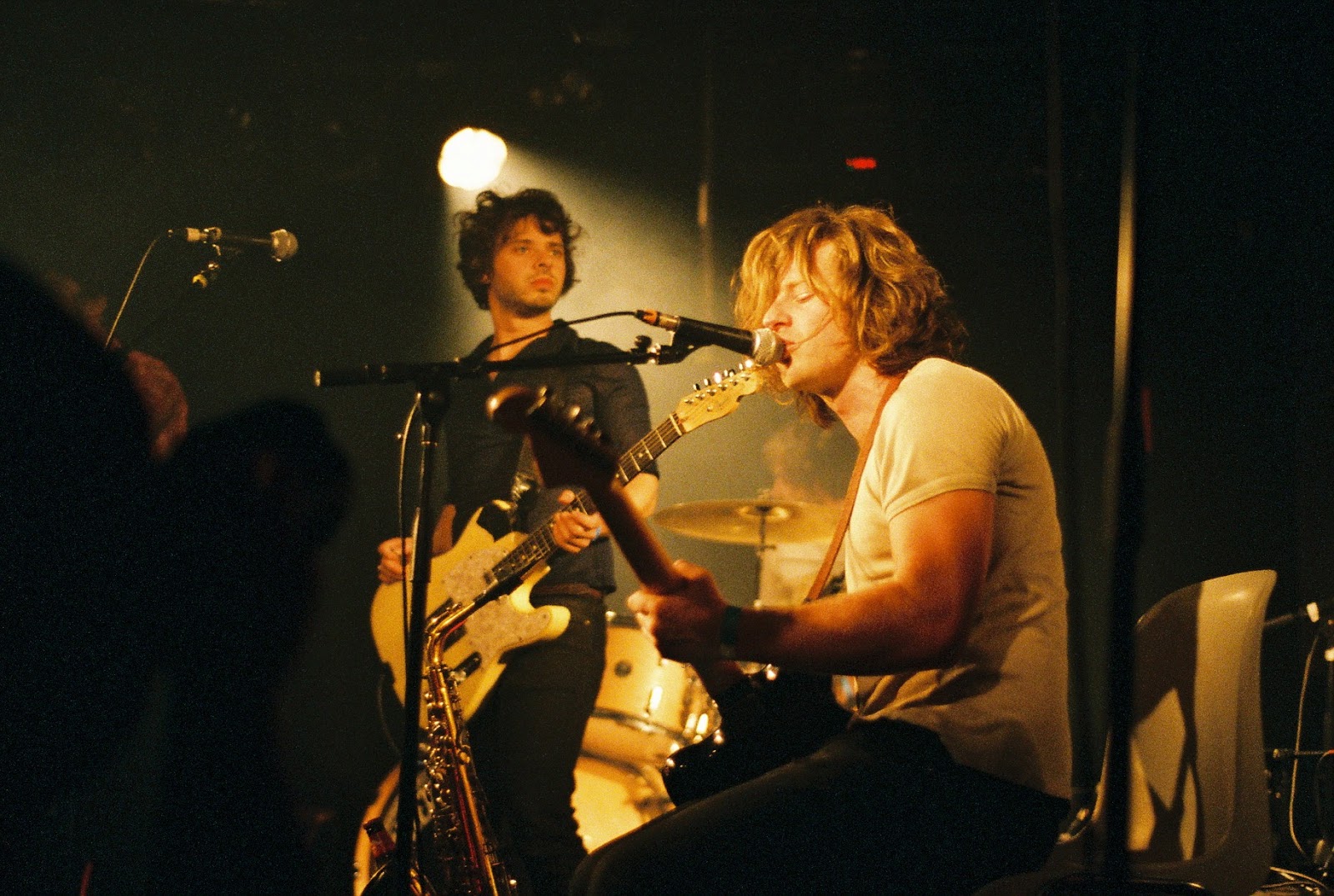
There'll be more coherent thoughts and collections from me soon, but I think that taking some time to pick out a few photos that maybe don't fit in with them is a great thing to do. Because they're interesting at least, lovely (or cute) at best, and I don't want them to get lost in the depths of the photo library and be forgotten.

12.5.13

ordinary

Contrary to the title of this post, I think these images, and the things within them, are anything but. I'm aware that it's potentially a bit redundant to say that there is beauty in the ordinary; it's been said and demonstrated a million times (including a few times on this blog). But I'm also aware that so much of my output lately is of overtly extraordinary content - live shows, newborn babies, weddings - so I felt it would be a good idea to balance that with some everyday visual observations.

This first image, for example, is of perhaps the least ordinary person in the whole world: my mum. But the wooden deck, the cute deckchair cover and the comfy slippers encapsulate her typical Sunday morning, and perhaps speak to many of our typical weekends: comfort, modesty, relaxation. Certainly sitting out on the deck in a dressing gown sums up a lot of the time I spend at my parents' place, so this image is absolutely a representation of the everyday for me, in that context. It's a beautiful image, though, both because of how much I treasure the person and the activity within, and for its aesthetic simplicity. The natural tones, the composition, the lines of the planks, the slight vignetting thanks to my new LC-A+: it all works, and so visually and otherwise this is a wholly successful photo.


I recently did a solo shoot with a singer/songwriter which went for quite a few hours. We were shooting at his house and we were going about it in a pretty leisurely fashion, so much so that he decided to take a break to cook lunch. He was happy for me to shoot during lunch and the kitchen had beautiful natural light, so I got in close for a few aspects of the process. Heating oil in a pan, chopping tomatoes; an old stove, 1970s tiles, Keen's Mustard Powder on the shelf: we all know this. They are pieces of our collective everyday, and as such they simultaneously mean the same to all of us, and evoke a unique set of memories or meanings for each of us. I adore these photos, and especially the tomatoes shot, with its stunning window lighting.


More everyday - this time, an early afternoon in a place that exists on the cusp of urban and suburban, authentic and gentrified. A cafe - and it could be one of hundreds that scatter the suburbs surrounding inner-city Melbourne - with some gorgeous light streaming in; and a decidedly suburban car wash - a blue man against a brilliant blue sky. What is especially fascinating about the second shot is that the sign's 'shadow' makes it appear as though the sky is a fake - a backdrop to some kind of surreal theatre set. The strange markings that have appeared on the negative enhance this odd effect.

These are all photos of ordinary, day-in-the-life objects and occurrences. But there's a reason that images such as these are perennially appealing, and hold a special place in many hearts. Though the subjects are ordinary, they make up the bulk of our experiences. As such, I don't think they can be dismissed or discounted in any way.

26.4.13

(more) money for rope

It's been a while since I've posted here I know. I've been working on a whole lot of stuff, including a pretty mammoth post about my obsession with film. But seeing as that is evidently taking its sweet time to come together, I thought I should just give you some photos to look at.

It's no secret that Money for Rope are one of my favourite bands. And I don't just mean one of my favourite Melbourne bands - I mean one of my favourites in general, anywhere. It's also no secret that I love Saskwatch. So when the two bands announced a tour together it was a given that I would be there with my camera. God knows I've taken enough photos of Saskwatch, though, so I just shot MFR - though Saskwatch still manage to make their presence felt via the bass drum.


Last time I shot a MFR live show I did so in black and white, which turned out great. I think the black and white really suits the music - rough grain for the dirty garage soul rock. But variety is always a good thing, so I shot them this time in colour. The lighting was great and, let's face it, their performance always makes for awesome images, so I don't feel that colour was a bad move.

 
Their lead singer, Jules, has been in a chair for a while with some kind of rockstar injury (!), but bloody hell he owned that primary-school-chair-and-moonboot combo harder than I thought possible. So fun to watch. (I heard that he fell off the chair later on during the set - and continued to rock it horizontally - but I had put away the camera and moved to the back to hear it better. Damn.)


So here you go - some cool photos of a ridiculously amazing band. See you at the Northcote Social Club in May? Yeah I will.

4.3.13

a few types o' portraits

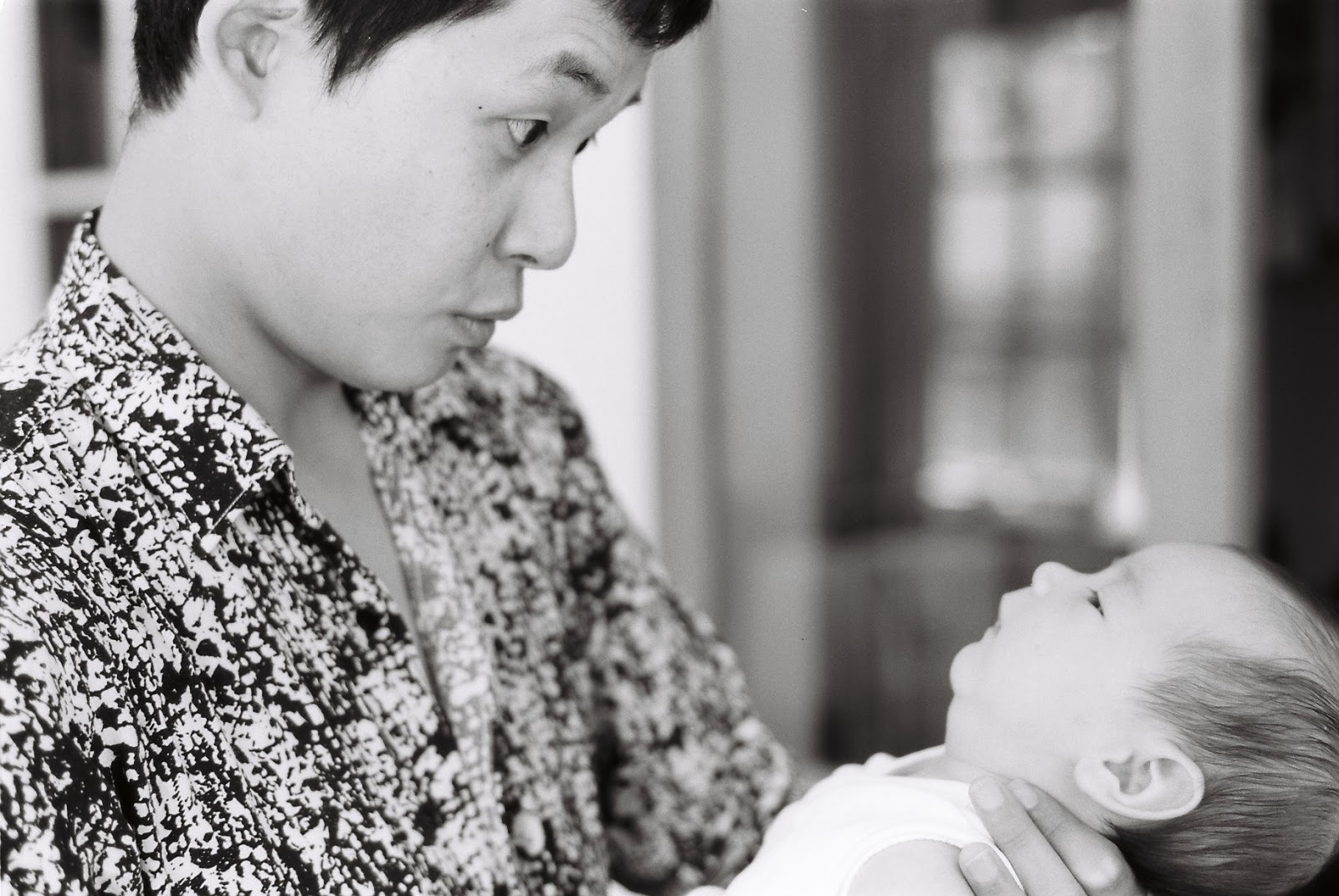
One of my friends recently had a baby. This is relatively new for me; despite being 'of age', very few of my close friends have come to procreate. (Yet.) So when I told this friend that I would love to come and meet his baby, he invited me over and asked me to bring my camera. YES!

I've never shot newborns before, but I figured that there can't be much to it - they look so damned cute regardless of what the camera does. And I was right! What a beautiful picture of a beautiful baby.


Here's a couple with Dad a little more involved. They're so lovely, and one of the nicest things is, they really don't need a lot of forethought or analysis; they are gorgeous simply because of what is in them.


Now, I'm not saying Jim isn't naturally gorgeous... but these photos took a lot of forethought! Which is because, unlike some casual snapshots of a friend, these are carefully planned press shots for the one and only Grizzly Jim Lawrie. I'd never purposely gone after sun glare (aka lens flare) before, and I wasn't sure how easy it would be to achieve. But we both agreed that regardless of actual glare, we wanted to capitalise on the early evening golden sunshine - my favourite kind of light. As it turned out, the flare worked pretty beautifully too!

The first two of Jim are being used as press photos. I liked this one, but he thought it looked like he was holding some kind of intergalactic weapon. Fair enough.

So in the first instance, it was a friend's baby, where I could shoot however I wanted - very natural, very spontaneous and organic. Then there was the music press shot, where creativity is still prized, but you work within certain boundaries to achieve a previously agreed-upon goal. Now we have what is perhaps the least flexible type of portrait I've ever done: the actor's headshot.

I did quite a lot of research to figure out what kind of guidelines, or rules, existed when it came to professional headshots. My understanding is that agents and casting directors (is that what they're called?) generally don't want anything too 'different' - which for me means no grain, no wacky angles, no warped colours, no candid moments. It was an interesting challenge, and I think this image was a good result. I shot Rachel from above because everyone looks better like that (there's a reason all the stupid girls take their selfies with arms stretched up to the bloody ceiling), and I used a film with natural tones and fine grain. Look who knows if this is a desirable outcome in terms of the industry - but you can see her face, she looks pretty, it doesn't look airbrushed, and it doesn't look like she's advertising toilet spray. Also, Rachel likes it. So as far as I'm concerned, it's a winner.

Is there a conclusion to this somewhat strange mixture of portraits? Well, I guess it's that portraits vary a lot! But perhaps also this: even the most straightforward, rigid type of portrait can engage if you connect with your subject and capture something of who they are. (OK I guess that's not technically a conclusion, in that I haven't specifically discussed it in the body of the post, but I still think it's true so it will remain my final thought.)

15.2.13

summer shots (and a thought on retro)

If I take my Holga down to the beach I usually load it up with slide film so I can exploit the brilliant blues of the ocean and the sky, which come out beautifully with some cross-processing action (like in these ones I posted a while ago). But this time, I decided to use some old colour film just for something different. I didn't think I'd love the results, but I really do! The wonderful fading means the yellow of the sand is tonally very similar to the blues, which I think makes for a lovely, harmonious image. And the cute factor of little Cash certainly helps the photo's appeal!

I guess this shot is somewhat boring, but at the same time it's pretty classic: the unpretentious shoreline of the seaside town in which I grew up. Actually, that's not boring at all.

So I needed to use up my film here because I was near the photo place and wanted to drop it off for development. I've long had a fetish for city-sky-gazing, so I thought I'd just get this slightly dated skyscraper on this slightly dated film. One thing that is interesting about this, which is due to overexposure on my part, is that the sky was totally clear - a brilliant blue. The washed-out result here, though, somehow suits the building I think. Nothing brilliant about it - which in this case is a good thing.

Before I ventured into the city and looked to the sky, I was out visiting a friend at North Coburg. I had never really been there before, and like a lot of older (un-gentrified) suburbs, it has plenty of visual quirks. So I shot these while waiting for the tram. I didn't realise that they would overlap - but this is a happy accident that often happens with the Holga, et al.

I joined them together just to get an idea of what the whole image looks like. I'm not sure if I prefer them separate or together! But I do very much like them, regardless of their presentation. In the first solo image, and in the joined image, I think the repeat of the 'O'Gormans' signage, at different scales, is pretty charming.

I wonder about the validity of photographing these kinds of kitsch artefacts; I mean, it's not exactly original. But I tend not to overthink my photography, so worrying about being original or otherwise is never at the forefront of my mind. Rather, if something appeals to me visually, and I can envisage it as a photograph, that's all the justification I need. However, if I was forced to justify these kinds of images as more than just trading in on the retro-cool factor of the objects, I would say that living in the inner north, too often beautiful remnants of our childhoods and markers of a suburb's character are demolished to make way for something that will one day be a childhood remnant, and come to define the suburb anew, for someone else. It's sad, but it's inevitable. The reality is, these things in the photo(s) will one day be gone. Even the generic beach shot above depicts a shoreline that will undoubtedly shift with the changing tides and coming seasons. And what is photography for if not to capture a time and a place - to prove that it existed and to prove that we were there, and to hold onto it and value what we have here and now?